Exploring Folk Art with Rob Gorrell
  • About
  • Contact Form
  • Metal work
  • Rustic Furniture Gallery
  • Folk Art Gallery
  • Traditional Woodworking

A few new projects for a peaceful yard.

Rob Gorrell

Posted on May 5, 2013

It has been a while since I posted anything new, but I have been working away in the shop.  I have been working on several new tin projects that I hope to post soon.

But most of my time has been spent updating our back yard.  It had been several years since anything really new had been built and it was looking pretty sad and shabby.  the first project was a new fence.  It was supposed to be a two weekend job……..that ran into about 4 I think.  I should have given more thought to the 300+ individual fence posts that I cut out.

blog pic 2

It took several days and evenings to get everything cut. Then there was getting the frames built, level lines pulled and the fence constructed.  At this point this is what the fence looks like.  We will be adding gates later.

blog pic 1

After the fence was in we needed to add a new shelter for the blueberries, blackberries and raspberries that we are trying to grow.  The old shelter kept the birds out but was getting pretty shabby. We decided to go with a greenhouse style structure made from conduit and bird netting, and lots of zip ties.  I wanted something that could be taken down in the winter if we want to take it out.

blog pic 3

We also tore out some trellis work and wood artwork that was along the garage.  I decided that I wanted to do a copper bird sculpture along part of the wall. It started out as a trellis for the clematis vines, but after Shelley and I worked over the design we decided to make it a stand alone sculpture instead.  The theme is flying birds in copper.  The inspiration was Shelley’s bird jewelery, and the image of birds taking flight.

Birds for blog

The birds were cut from scrap copper and formed on a sinking block to give a more natural shape.  The birds were then soldered to copper wire and formed along the fence and wall. Here is Shelley taking a break from making jewelry to help me get the shape right.

Shelley working on birds

And here is the finished sculpture. I think it adds a nice feature to the back yard.

birds for blog 2

So that is what I have been doing mostly. It is my plan to have these projects finished in the next couple of weeks so that I can get back to the coopering projects that I have been itching to work on now that the weather is good and I can work outside.

More to follow soon.

Categories: Folk Art, Tinware

Tagged: backyard projects, copper folk art, copper sculpture, folk art birds, greenhouse, hand made fence, wood fence

0 Comments

An article on music and craft by Robin Wood.

Rob Gorrell

Posted on February 21, 2013

“Robin Wood is an internationally respected wood worker specialising in use of local timbers and traditional techniques, but with a distinctive modern twist.”  If this is the first you have heard of Robin Wood then you need to take some time and read his blog and website.

Today I read his post about his teaching method for spoons and the pitfalls of just going off free-form from the start, without studying some good references or taking some good classes to get started.  I realize that in a lot of our cases these classes are not readily available and we do the best we can with books and videos.  Anyway, I don’t have anything profound to add, just wanted to pass on this great article.

http://greenwood-carving.blogspot.com/2013/02/learning-craft-is-like-learning-music.html

Rob

Categories: Traditional woodworking, Uncategorized

Tagged: Robin Wood, spoon making, Sppon makeing

0 Comments

Tin lanterns for fun and function.

Rob Gorrell

Posted on January 20, 2013

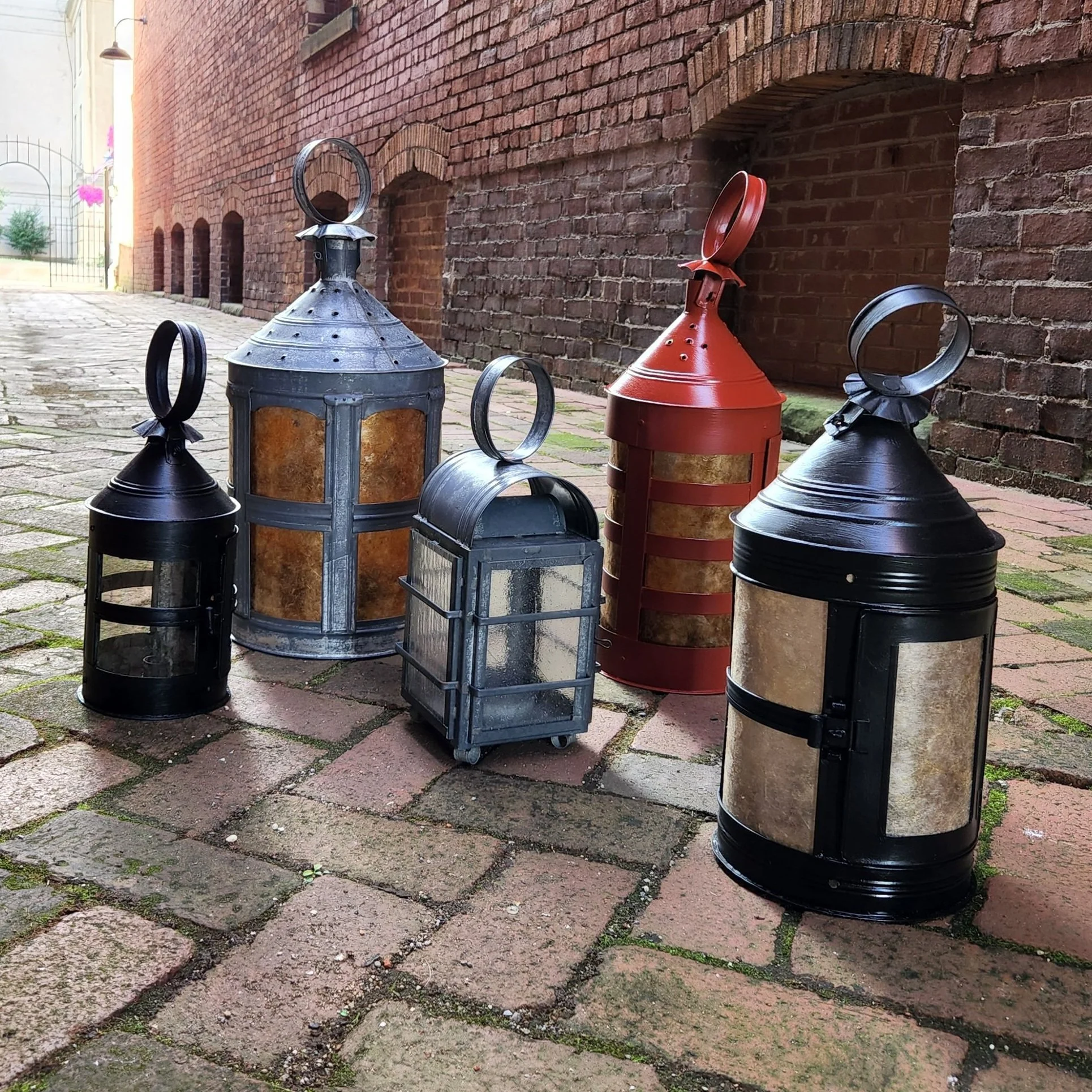
For the past few weeks I have been spending a lot of my shop time learning more about tinsmithing.  I just finished a series of tin candle lanterns and have been trying to get them up for sale in my Etsy Store.  I have been making a few different designs.  The first is the classic Shaker tin lantern.

Shaker inspired tin lantern.

Shaker inspired tin lantern.

This single candle lantern has a lift up reflector back for lighting and changing the candles. I plan of a more detailed post about this type of lantern later on. I like this lantern and it is the first time I had tried to make the skirted top and handle like this.

The second type of lantern is another classic design with 3 glass sides and a reflective back.  It is similar in design to the Shaker lantern, but with a domed top.Classic-lantern-for-web  I made one of these with the domed glass guards and one without.

The third set of lanterns is the Ship’s Lantern that I have made before.  This is another project I hope to write more about soon.

Colonial style hot-dipped tin Ship's Lantern by Rob Gorrell

Colonial style hot-dipped tin Ship’s Lantern by Rob Gorrell

Categories: Uncategorized

2 Comments

An update to my pole lathe.

Rob Gorrell

Posted on January 16, 2013

Poler lathe issues


Using a pole lathe, or more accurately a bungie lathe in my case, is a lot of fun.  It is quiet, safe and creates less dust than a power lathe.  Now I don’t think I would want to work at one all day for production, but it is a great addition to my human powered tool workshop.

I first built this pole lathe a year or so ago. It was about the third lathe I had built and the first that actually worked.  However, I built it similar to a modern style lathe. The lathe sat in the corner for a long time waiting to be used.  I spend some time on a great website for those wanting to turn green wood with human-powered lathe and other green woodworking techniques, the Bodger’s Ask and Answer.   It turns out that I needed to make some changes. For one, the bed of my lathe was too low. If your pole lathe is low like mine was, then you work all hunkered over and out of kilter, leading to a sore back.  According to the regulars on the Bodger’s forum the lathe centers needed to be “a little below nipple height”.  I found that adding risers to the lathe so that the centers were indeed nipple height made the lathe much more comfortable to use.

Another issue that came up was that as the lathe sat in the corner waiting it also dried out and shrunk more than expected. Rob Gorrell pole lathe 2

This shrinking allowed the wedges for the poppets to go in too far. It also made the tool rest out of alignment with the centers as can be seen in the two pics so far. I had been making do with some temporary shims but decided to add a thin layer to the bottom of the poppets and tool rest. I also shortened the tool rest base so that the cord would no longer rub against the rest, creating friction.  When you are the power source friction is a bad thing. It saps energy away from the tool, and you.Blog-pole-lathe-2

Blog-pole-lathe-3Now that I have made these improvements the lathe is working much better.  Now I need to learn how to turn.Blog-pole-lathe-1

The next improvement to the lathe will be a better foot pedal and a proper tailstock feed handle. More on those later.

Categories: Traditional woodworking

Tagged: bodgers, bungie lathe, green woodworking, hand tools, handmade, Pole lathe, rob gorrell, traditional woodworking

0 Comments

A new year with a new look.

Rob Gorrell

Posted on January 10, 2013

Hi. One on my New Year’s Resolutions was to get this blog looking a bit better and easier to read. I found this theme on WordPress and switched over a couple of days ago.  I will be tweaking the content to remove some clutter and hopefully make the blog easier to navigate.

Also, I have about 10 projects going in the shop that I will be trying to post about soon. In particular I am working on the following:

An interpretation of an original 18th century tin desk set (in WAY over my head on this one),

Improvements to my foot powered lathe,

A big clock made from a tin ceiling tile and license plate parts,

New tramp art projects.

and adapting an antique cooper’s croze to use making buckets and tubs.

Stay tuned.


Categories: Uncategorized

0 Comments

I bought a new old saw! Woohoo.

Rob Gorrell

Posted on December 4, 2012


IMG_2669-for-web

Over the weekend I ran into an old treadle jigsaw the likes of which I have not seen before.  It is wobbly, damaged, lopsided and perfect.  I have never seen quite like this.  Part of it looks like maybe it was factory made. But then other parts are totally make do fixes.  Maybe it was a kit from an old catalog?

IMG_2676-for-web

I am thinking I would like to fix this saw up and use it in my shop.  Everything moves freely and the only thing that seems to be missing is the top blade mount.  However, There are no real bearings and I think the friction losses on this baby will be severe.  I will probably make some changes in the way some of the moving parts connect.

Speaking of moving parts, check out the great castings on the drive train:

IMG_2672-for-web

I think this is probably from the late 1800′s, maybe 1880′s?  I want to find out more about it before I start making changes.  If anyone has information about this model I would be very glad to hear it.

Here are a couple more photos. I cannot find any identification or markings anywhere on the saw.

IMG_2673-fo-web

IMG_2671-for-web

Categories: Traditional woodworking

Tagged: antique jig saw, antique scroll saw, antique tool, foot powered saw, jigsaw, treadle jigsaw, treadle scroll saw, wood jigsaw, wood scroll saw

0 Comments

Monkeys on a Weathervane? I call it “King of the Hill”.

Rob Gorrell

Posted on November 25, 2012

For some reason the other day I got to thinking about the old “Barrel full of Monkeys” that we played with as kids. Did you have a set? It was a pretty simple toy, but fun.  At the same time I was thinking about the series of folk art weather vanes that I am working on in the shop.

So here is how my mind tends to work sometimes. I am thinking of a new weather vane design and about monkeys, so the obvious conclusion is that I need to make a weather vane full of monkeys. Right? So I did.

Cutting out some of the planning steps, I ended up with a pile of monkey shaped blanks of basswood. I was going to hand-carve each of the monkeys, but decided to save time and effort and power carve them into vague, monkey-influenced shapes.

It was at about this point that I started thinking about how the monkeys would be climbing over each other to get to the top of the weather vane. Would the top monkeys be pulling the others up, or kicking them off the heap? Were the monkeys working cooperatively to achieve the summit, or were they trying to jerk the top monkey off of the peak? I did not know yet.

After loosely carving the monkeys I set them aside and worked on the copper weather vane parts. For the arrow and tail I used some salvaged copper sheet that I had in the shop.  Once the copper was shaped and soldered into shape I worked on the layout of the monkeys. Thank goodness for zip ties and wires. Getting wooden monkeys to fit neatly on a weather vane turned out to be quite a challenge.

Skipping forward again, I finished carving and painting the monkeys and fastened them together using a variety of techniques to get them under control.  For the base I used part of a salvaged pine beam, an old spool of some sort and a few chip carved pieces of a shipping crate.  A few layers of paint, some antiquing of the copper and I called it done.

King of the hill weather vane

In the end I decided the monkey on top was a mean looking dude and is trying to dominate the other monkeys. Maybe I’m just in a mood, but that is the way I see it. What do you think?

I have listed this creation in my Etsy Store if you are interested in purchasing King of the Hill for your collection.

Categories: Folk Art, Painted Folk Art, Tramp Art, Whittling

Tagged: barrel full of monkeys, chip carved, copper weather vane, folk art, hand made, painted folk art, recycled, salvaged wood

0 Comments

« Older entries   

Where can you purchase my work?

My work can be purchased through my Etsy store or by contacting me directly I try to keep Etsy current with my most recent designs. Email me or call 304-428-7089 to reach me.

Etsy button

French Angel Sign

My Disclaimer.

My blog is intended to show what I am up to with my attempts at different types of folk art and rustic work, and to promote other like minded people. I do not claim to be an expert, or even good, at the techniques I post. I am learning as I go. I try to be as safe as I can in my practices. Anything dumb you see me doing is not an attempt to get you to do it that way. Be safe. I am not compensated in any way by the people and sites that I link to or promote. If you want to try the projects I am working on, great. If you are better at it than I am and want to show me how to get better, great. Comments are encouraged.

Recent Posts

  • A few new projects for a peaceful yard. May 5, 2013
  • An article on music and craft by Robin Wood. February 21, 2013
  • Tin lanterns for fun and function. January 20, 2013

Enter your email address to subscribe to this blog and receive notifications of new posts by email.

Join 20 other followers

Coopering Folk Art Painted Folk Art Rustic Furniture Tinware Traditional woodworking Tramp Art Uncategorized Whatever Whittling

Archived posts

Blacksmithing links

  • Beginning Blacksmithing Beginning Blacksmithing

Folk Art Links

  • Clifford A. Wallach – tramp art
  • John Gabriel – AKA Funky Outsider
  • Mountainmade.com
  • My Etsy Store
  • Outsider Folk Art Gallery
  • Strawser Tramp Art
  • The Cheswick Company
  • William H Roy – Folk Artist

Rustic Links

  • Association of Polelathe Turners and Greenwood Workers
  • Daniel Mack – Rustic Furnishings
  • Mountainmade.com
  • My Etsy Store

Tinsmithing links

  • Tinsmithing Class Tinsmithing Class

Traditional woodworking

  • Association of Polelathe Turners and Greenwood Workers
  • Coopering Class Coopering Class
  • In the workshop with Derek Cohen
  • Lost Art Press Lost Art Press
  • The Woodwright's School

Tramp Art Links

  • Clifford A. Wallach – tramp art
  • Mountainmade.com
  • My Etsy Store
  • Outsider Folk Art Gallery
  • Strawser Tramp Art
© Rob Gorrell,2011. Unauthorized use and/or duplication of this material without express and written permission from this blog’s author and/or owner is strictly prohibited. Excerpts and links may be used, provided that full and clear credit is given to Rob Gorrell and Rob Gorrell- Exploring Folk Art,with appropriate and specific direction to the original content.

Return to top

© Copyright 2013

Blog at WordPress.com.

Theme: Duet by The Theme Foundry.

Exploring Folk Art with Rob Gorrell
Blog at WordPress.com. Theme: Duet.
Cancel